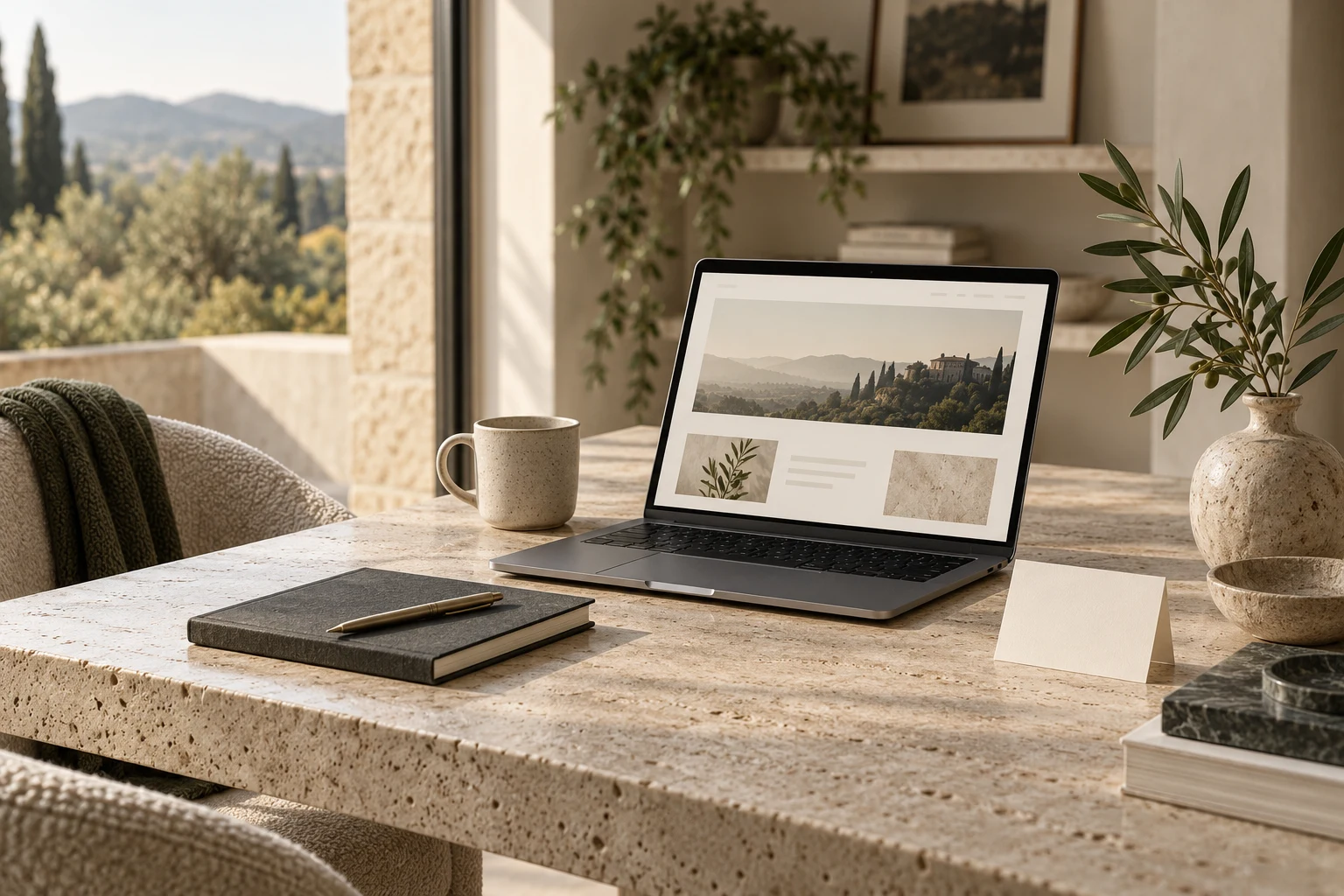

A starter website makes a domain less abstract. You can see a direction for the name, imagine the first customer, and picture a business taking shape. That is one reason I develop these presentations for PremiumBrands.
But the presentation is a starting point. Your intended business may need a different audience, offer, or visual identity. When you acquire a name, choose the existing assets because they help your plans, rather than assuming everything shown should become part of your launch.
Separate the name from the presentation
Begin with the domain itself. Would you still want it if the website looked different? If the answer is yes, you have a clearer basis for the decision. The name can be valuable to your project even when the current concept is not the direction you want to take.
Next, review the existing site as a collection of decisions: layout, color, typography, copy, imagery, and technical setup. Some may be useful. Others may need replacing. A beautiful homepage is less useful if its message describes a different customer from the one you intend to serve.
For example, a domain presented as an outdoor equipment brand could also support a photography equipment guide. The name might fit both, while most of the photographs and product language would need to change.
Make a short keep, adapt, replace list
Put each available asset into one of three groups. Keep the parts that already suit your business. Adapt the parts with a useful foundation. Replace the parts that send the wrong message or cost more to fix than to remake.
A clear page structure might stay. The headline might change. A logo could be usable while a product mockup remains only a concept. A designer or developer can work from that list. “Keep the layout, change the headline, replace the product photographs” is a usable brief.
Choose based on the next launch, not a distant version of the company. If your first goal is a focused service page and an inquiry form, a large catalogue may add work you do not need yet.
Confirm exactly what can transfer
Ask for a specific asset list before agreeing to a package. Which website files or platform access are available? Does the offer include a logo file, written copy, particular images, or social accounts? Which items require a separate license or further work?
The answers belong in the agreement. Concept images do not establish that products exist, and a displayed website is not evidence of customers or revenue. Existing materials and newly commissioned development are separate things.
On PremiumBrands, the domain and a personalized roadmap are included with a purchase. Particular existing starter assets are optional by agreement. Implementation is separately scoped. That distinction lets you choose the help you need.
Use the roadmap to decide what happens next
Your map should reflect your intended use and the resources you can realistically commit. A new business may need a Brand Launch Map. An existing business may need a Rebrand Map. Product Development Map guidance can help when a website, tool, or product needs planning.
Ask which assets will help you test the offer or serve the first customer. Keep the assets that answer it. Leave room to make the brand your own.